

Blog
Jewellery for Saree: A Styling Guide From the Blouse Up

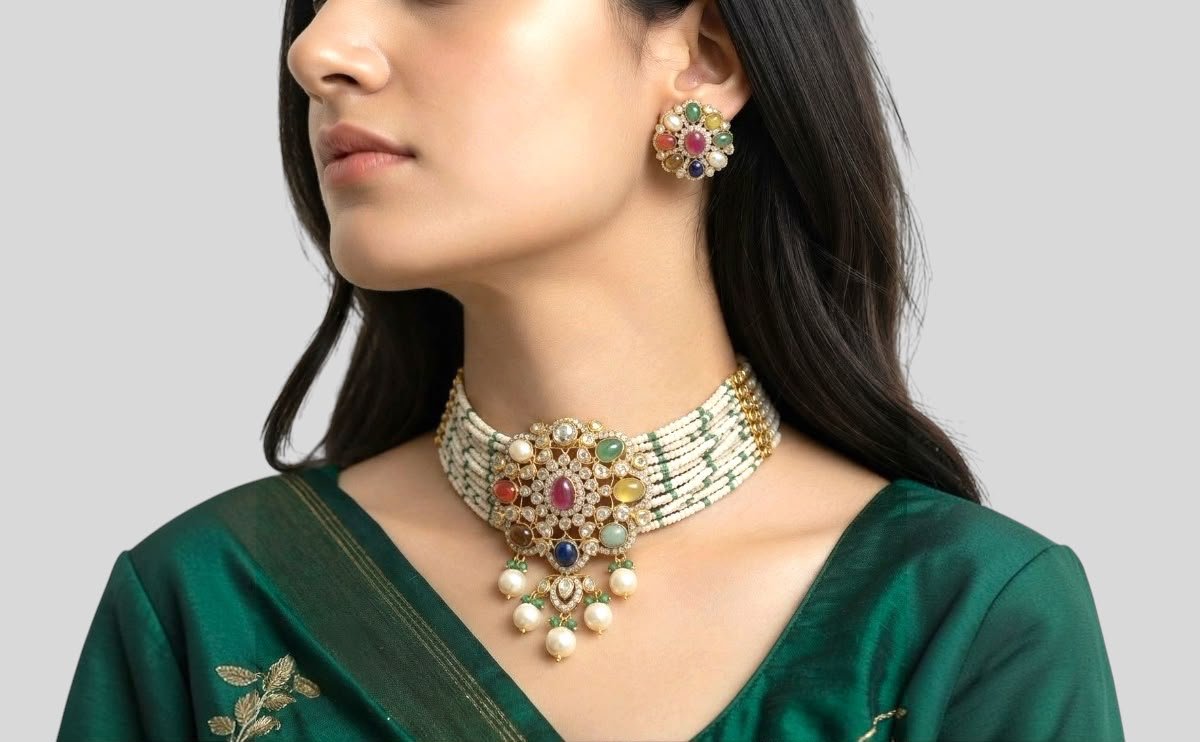
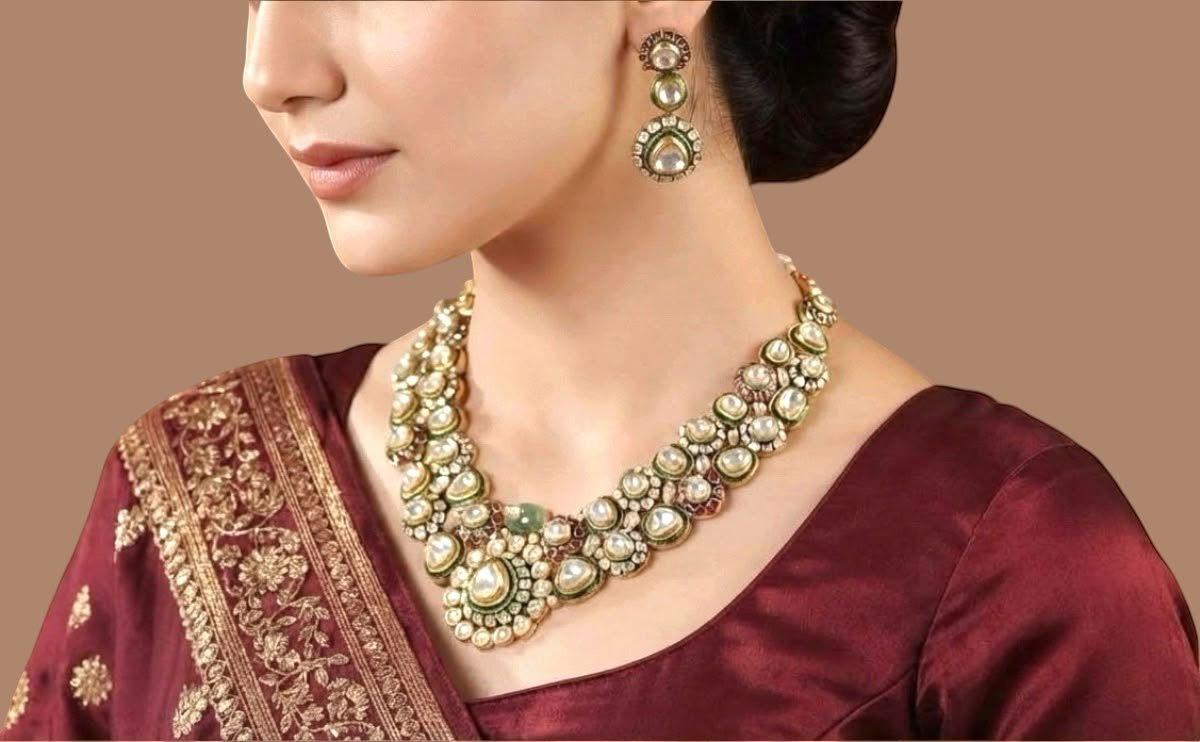
Choosing jewellery for saree works differently from dressing a lehenga. A saree is one continuous drape, not a set outfit, and the blouse, the pallu, and the pleats all pull attention in different directions at once. At Taparia Jewels, we craft Kundan, Meena, Jadau, Polki, Diamond & Open Setting jewellery from our C-Scheme workshop, and sarees bring us some of the most interesting styling conversations we have, since the same silk can suit three completely different jewellery choices depending on how it's draped.
This guide works from the blouse outward: neckline first, then fabric, then region, then occasion. It also explains why real gemstones in open gold behave differently from the stone-studded replicas most saree styling blogs photograph.
Why Jewellery for Saree Starts at the Blouse, Not the Pallu
A lehenga's jewellery answers the embroidery. A saree's jewellery answers the blouse. The neckline you choose decides nearly everything that follows.
A deep back or boat neck invites a long, elaborate necklace or a dramatic backless detail, since the blouse itself leaves that space open for jewellery to fill. A high neckline reverses the rule entirely. It asks for a choker, kept close to the throat, with earrings carrying the real weight of the look instead.
Sleeve length matters just as much, and brides forget it constantly. Full sleeves push bangles and bracelets out of the picture, so a ring or a single statement piece near the wrist works better than a stacked set nobody will see.
Jewellery for Saree in Silk and Banarasi
Heavy silk and Banarasi weaves carry their own gold zari, so jewellery for saree here needs genuine weight to hold its own against the fabric. A Jadau necklace suits this silk particularly well, since fused gemstones read as substantial even at a smaller scale than Kundan requires.
Emerald against red or maroon silk remains the strongest combination we see season after season, echoed directly in our emerald Polki choker. Gold Banarasi, with its dense zari border, rewards restraint instead. One Kundan choker necklace, left to stand alone, outperforms a full matching set every time.
Jewellery for Saree in Chiffon, Georgette and Organza
Lighter fabrics move with the body, and jewellery for saree in these weaves should move too. Heavy Jadau can look oddly static against chiffon's drape. We lean toward Diamond and Polki in open setting instead, letting light pass through the stone the same way light passes through the fabric. Our guide to Open Setting jewellery in Jaipur explains why this technique suits movement so well.
Pastel chiffon, increasingly popular for daytime wedding functions, pairs beautifully with Tanzanite Polki or a single Diamond pendant, kept deliberately understated against the soft colour.
Jewellery for Saree Across Regional Draping Styles
Draping style changes what the body actually shows, which changes what jewellery for saree needs to do. A Bengali drape leaves the midriff and pleats fully visible, often paired traditionally with a bold, substantial necklace and a statement maang tikka. The seedha pallu, common across Gujarat and Rajasthan, drapes forward over the right shoulder, concealing part of the blouse, so earrings and a choker carry more visual weight than the necklace alone.
A South Indian drape, pleated close and tucked without a loose pallu, suits a long, layered necklace particularly well, since nothing obscures the length. Our guide to bridal jewellery trends for 2026 shows how layering has become popular well beyond its traditional South Indian roots this year.
Jewellery for Saree at the Reception
The reception saree carries different rules from the wedding-day drape. Brides often choose a sleeker silhouette here, and jewellery for saree at this stage tends toward Diamond over heavy Polki, favouring clean lines that photograph well under reception lighting. Our comprehensive guide to Diamond Jewellery Jaipur explains exactly what to check before choosing a stone for a night built around flash photography specifically.
A Polki and Diamond brooch, pinned to the pallu rather than worn as a traditional necklace centrepiece, has become a genuine favourite for exactly this function.
Jewellery for the Mother of the Bride and Groom
Sarees dominate this generation's wardrobe far more than lehengas do, and jewellery for saree here deserves its own consideration entirely. Mothers tend toward Kundan and Meena work with real presence, not restraint, since this occasion carries its own significant weight within the family. Our detailed guide to Kundan Meena Jadau jewellery explains the craftsmanship behind exactly this kind of substantial, generation-defining piece.
Our guide to Anniversary Jewellery Jaipur also offers genuine inspiration here, since many families choose this wedding season specifically to gift the mother of the bride or groom a piece marking her own decades of marriage alongside her child's.
Jewellery for Saree With Gemstone and Colour Matching
The same contrast logic from choosing jewellery for a lehenga applies to sarees too, though sarees often carry a border colour distinct from the body of the fabric, giving you two colours to answer rather than one. Our guide on what Polki is and why Jaipur is famous for it explains why this stone's natural irregularity suits sarees particularly well, since it never competes for uniformity against a woven, textured silk.
Multi-coloured sarees, particularly those with contrasting borders, suit our Navratan jewellery especially well, letting nine stones echo several shades within the drape at once.
Bring Your Saree to Match Jewellery in Person
Draping changes how jewellery actually sits on the body, so we recommend bringing the saree itself, or at minimum a photograph of it draped, to your private appointment. We hold Emerald, Ruby, Polki, and Diamond against the pallu and the blouse together, not the fabric alone, since that combination is what will actually appear in your photographs.
Brides planning from abroad can send photographs and join a video consultation instead, a process our guide to NRI Bridal Jewellery Jaipur explains in full. If nothing in our current collection fits your exact drape, our guide to Custom Bridal Jewellery Jaipur explains how we build a piece specifically around it. Collectors curious about rarer material can also view our guide to Emerald Jewellery Jaipur and our current Zambian Emerald Polki & Diamond Choker, available for private viewing.
Follow Taparia Jewels for Saree Styling Inspiration
We share bridal commissions and styling notes regularly. Follow us on Instagram at Taparia Jewels for behind-the-scenes updates. Additionally, connect with us on LinkedIn at Taparia Jewels for our full jewellery knowledge series. Explore our complete blog collection for more guides, including our companion piece on jewellery for lehenga.
Frequently Asked Questions
What jewellery suits a deep-back blouse best?
A long or layered necklace, or a dramatic backless piece, since the open blouse creates space the jewellery is meant to fill.
Does draping style really change which jewellery to choose?
Yes. A Bengali drape shows the midriff and favours bold necklaces, while a seedha pallu covers part of the blouse and shifts focus to earrings and a choker.
What should I wear with a reception saree?
Diamond pieces with clean lines generally suit reception lighting and flash photography better than heavier traditional Polki.
How do I match jewellery to my saree from abroad?
Send photographs of the draped saree and join a video consultation, so we can hold stones against the actual pallu and blouse together.
How do I book an appointment?
WhatsApp us at +91 9950966382 to schedule a private appointment at our C-Scheme workshop.
Visit Taparia Jewels in C-Scheme, Jaipur
Visit our showroom by appointment at C-73, Flat No. 402, Blue Sky Apartments, Sarojini Marg, C-Scheme, Jaipur 302001. Additionally, WhatsApp us at +91 9950966382, or explore our full collection at tapariajewels.com. Jewellery for saree should move with the drape, not fight it.