

Blog
Polki, Emerald & Diamond Jewellery: The Ultimate Jaipur Guide

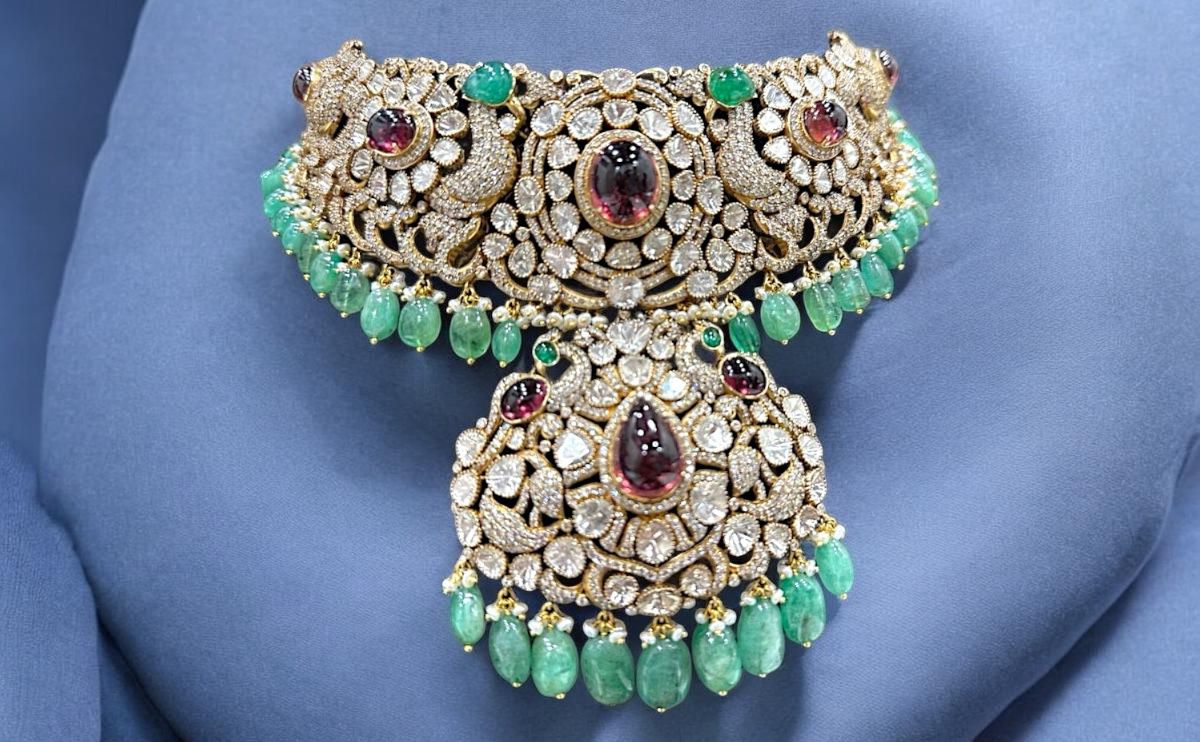
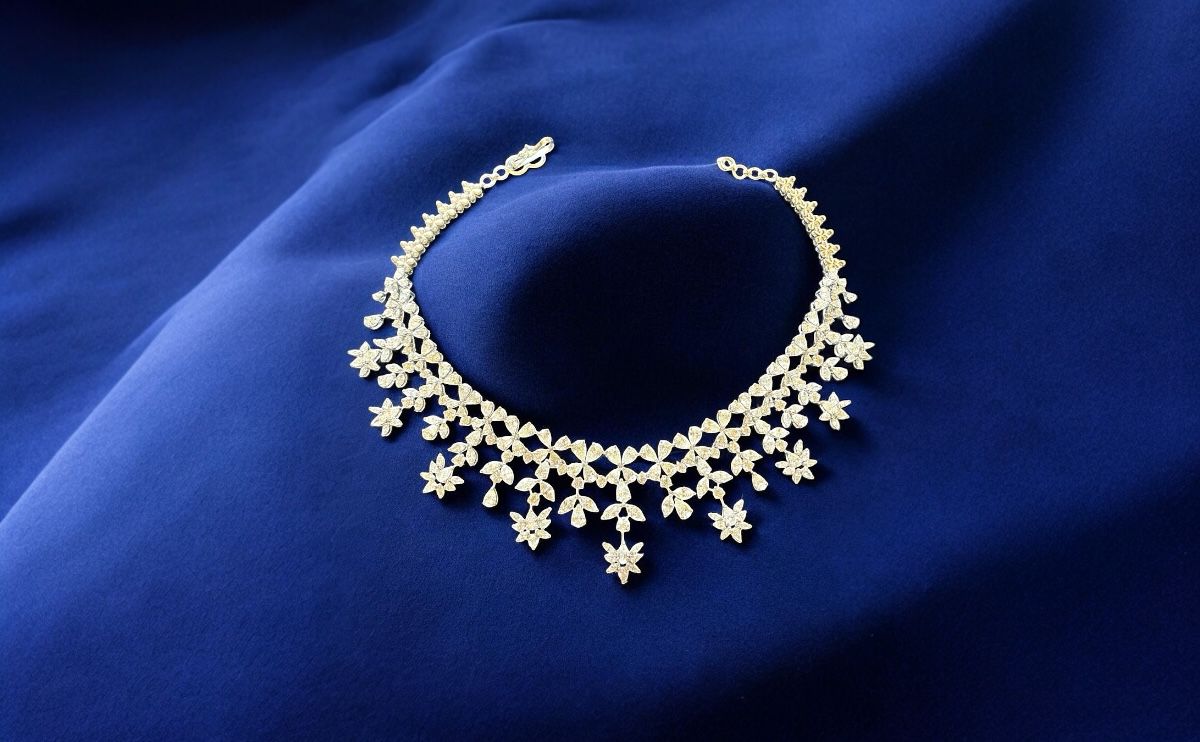
When shopping for polki jewellery in Jaipur, emerald jewellery, or diamond jewellery sets, prospective buyers encounter confusing terminology and difficult purchasing decisions. Notably, questions arise: What distinguishes kilwas polki from syndicate polki? Moreover, does a Russian emerald truly outperform a Zambian emerald? Additionally, what exactly do the 4 C's of diamonds mean in practical terms? Finally, should you consider investing in lab-grown CVD stones?
As a C-Scheme Jaipur jewellery manufacturer with 37 years of established experience, Taparia Jewels has guided thousands of customers through these exact questions. This comprehensive guide decodes everything about authentic polki jewellery, emerald varieties, diamond grading, and modern lab-grown alternatives. Our goal is helping you make informed decisions when purchasing luxury jewellery that becomes a lifelong treasure.
Understanding Polki Jewellery: The Two Primary Varieties
Polki jewellery represents raw, uncut diamonds expertly set in the finest 14K or 18K or 22K gold. However, not all polki stones are created equal. The two primary varieties—kilwas and syndicate—offer distinct characteristics, sourcing origins, and pricing implications that significantly impact your purchase decision.
What is Kilwas Polki? The Premium Authentic Diamond Option
Kilwas polki refers to raw diamonds sourced from traditional, artisanal mining operations, primarily in established Indian and international mines. These diamonds possess unique qualities that distinguish them in the market.
Origin and Sourcing Methods:
Kilwas stones are mined through artisanal and small-scale operations, primarily from Indian mines and older established diamond fields with historical significance. Each stone undergoes hand-selection through traditional grading methods refined over centuries. Importantly, every kilwas diamond receives individual assessment for clarity and colour characteristics.
Distinguishing Characteristics of Kilwas Polki:
- Organic clarity patterns featuring natural inclusions
- Varied colour grades with occasional subtle tints
- Exceptional transparency despite natural inclusions
- Higher transparency-to-weight ratio compared to alternatives
- Authentic, completely unenhanced raw diamonds
- Zero treatment or enhancement whatsoever
Market Pricing for Kilwas Polki Jewellery:
Kilwas polki jewellery commands premium pricing in the market. A kilwas polki necklace in 18K BIS hallmarked gold, featuring matched emeralds or rubies with traditional kundan-meena work, typically ranges from ₹2,50,000 to ₹8,00,000+, depending on stone weight, gemstone quality, and craftsmanship complexity. Source: Jaipur Chamber of Commerce jewellery trade data, 2024-2025.
Why Connoisseurs Prefer Kilwas Polki:
Jewellery collectors and serious investors prefer kilwas polki for several compelling reasons:
- Complete authenticity guarantee backed by professional documentation
- Historical significance often tied to established, reputable mines
- Strong investment value with consistent appreciation over time
- Minimal concerns about lab-grown substitution or misrepresentation
- Professional gemologists can authenticate easily using established protocols
What is Syndicate Polki? The Accessible Quality Alternative
Syndicate polki refers to raw diamonds sourced from larger, modern mining operations featuring transparent supply chains. These diamonds provide reliable quality with modern sourcing standards.
Origin and Modern Sourcing Approach:
Syndicate stones are sourced through modern, large-scale mining operations with transparent, documented supply chains and international certifications. Furthermore, bulk purchasing at wholesale prices ensures consistent availability. Additionally, standardised grading protocols guarantee uniform quality assessment across all stones.
Distinguishing Characteristics of Syndicate Polki:
- Consistent clarity across all stones in a batch
- Standardised colour grades meeting international benchmarks
- Transparent documentation throughout the supply chain
- Certified weight and authenticity verification available
- Minimal treatment for consistency purposes
- Certified documentation readily available upon request
Market Pricing for Syndicate Polki Jewellery:
Syndicate polki jewellery offers more accessible pricing while maintaining quality standards. A syndicate polki necklace in 18K BIS hallmarked gold, featuring emeralds or tanzanite with traditional kundan work, typically ranges from ₹1,50,000 to ₹5,00,000, depending on specific design and gemstone selections. Source: All India Gems and Jewellery Trade Association (AIGTA), 2024.
Why Most Buyers Choose Syndicate Polki:
- Better pricing than kilwas without compromising quality
- Consistent quality assurance across all pieces
- International certification readily available
- Wider availability meeting diverse customer needs
- Good investment value with steady appreciation
- Lower authentication concerns due to documentation
Kilwas vs Syndicate Polki: Comprehensive Comparison
| Factor | Kilwas Polki | Syndicate Polki |
|---|---|---|
| Origin | Artisanal, smaller established mines | Large modern mining operations |
| Sourcing Method | Hand-selected individually | Bulk standardised selection |
| Transparency | Organic, naturally varied | Standardised, consistent |
| Certification | Professional gemologist assessment | International certified documents |
| Price Range | ₹2,50,000-8,00,000+ per set | ₹1,50,000-5,00,000 per set |
| Investment Potential | Premium appreciation | Steady consistent appreciation |
| Authentication | Professional gemologist required | Certified document sufficient |
| Best For | Collectors, family heirlooms | Everyday luxury, bridal wear |
Expert Recommendation from 37 Years Experience:
For bridal jewellery in Jaipur, syndicate polki offers superior value with assured quality standards. Conversely, for family heirlooms and serious investment pieces, kilwas polki justifies the premium pricing through historical significance and investment appreciation.
The Complete Emerald Jewellery Guide: Russian vs Zambian vs Colombian Varieties
Emeralds represent the crown jewel of coloured gemstone jewellery. When expertly set in 18K gold kundan jewellery, an emerald's geographic origin significantly affects its colour, clarity, durability, and overall value. Understanding emerald varieties is absolutely essential when shopping for emerald jewellery in Jaipur.
Russian Emeralds: The Historical Prestige Option
Russian emeralds, primarily sourced from the Ural Mountains region, have been prized for centuries by royalty and collectors worldwide.
Distinctive Emerald Characteristics:
Russian emeralds display remarkable properties that justify their premium positioning:
- Colour: Deep, saturated green featuring slight blue undertones
- Clarity: Generally excellent with fewer visible inclusions
- Hardness: 7.5-8 on Mohs hardness scale, ensuring durable daily wear
- Treatment: Traditionally oiled using standard industry practice
- Market Availability: Declining availability as older mines continue depleting
- Price Range: Premium pricing at ₹8,000 to ₹25,000+ per carat for quality stones
Source: Gemological Institute of India (GII) and International Coloured Gemstone Association, 2024.
Why Russian Emeralds Command Premium Prices:
These emeralds maintain premium value for several compelling reasons:
- Historical significance dating back to Russian royal family preferences
- Superior colour saturation compared to competing geographic sources
- Exceptional transparency and superior light reflection properties
- Outstanding durability that withstands generations of continuous wear
- Strong investment appreciation over extended time periods
Perfect For: High-end bridal jewellery, serious investment pieces, family heirloom quality emerald necklaces and earrings set in 18K gold with traditional meena work.
Zambian Emeralds: The Modern Contemporary Favourite
In contrast, Zambian emeralds from the Kafubu region have become the contemporary benchmark for quality in modern emerald jewellery. These stones offer distinct advantages that explain their growing popularity among contemporary jewellery designers.
Distinguishing Characteristics of Zambian Emeralds:
Notably, Zambian emeralds possess unique properties that appeal specifically to modern buyers:
- Colour: Vivid, intense green sometimes featuring yellow undertones
- Clarity: Excellent clarity with minimal visible inclusions
- Hardness: 7.5-8 on Mohs hardness scale, excellent for daily wear
- Treatment: Minimally treated or often completely untreated
- Market Availability: Abundant and readily available internationally
- Price Range: ₹5,000 to ₹15,000+ per carat for quality stones
Source: International Gemological Institute (IGI) and Zambian Gem Standards Bureau, 2024.
Why Zambian Emeralds Dominate Contemporary Jewellery:
- Exceptional colour vibrancy that photographs beautifully
- Modern, consistent mining methods ensuring reliable supply
- Better clarity than Colombian emeralds in most direct comparisons
- Outstanding value-for-quality proposition
- Preferred by contemporary international designers
- Ideal for 18K gold kundan and modern open setting jewellery designs
Perfect For: Bridal emerald jewellery sets, everyday luxury pieces, contemporary open setting designs, gemstone combinations with polki or diamonds, affordable luxury jewellery.
Colombian Emeralds: The Classic Historical Green Standard
Additionally, Colombian emeralds from prestigious regions like Muzo and Chivor hold significant historical significance and remain widely sought after by collectors worldwide. These stones represent the traditional benchmark for emerald quality.
Distinctive Colombian Emerald Properties:
- Colour: Pure, true green representing the ideal industry colour standard
- Clarity: Often feature natural inclusions creating the "jardin" (garden) effect
- Hardness: 7.5-8 on Mohs hardness scale, ensuring excellent durability
- Treatment: Frequently treated with oils to enhance visual appearance
- Market Availability: Declining supply pushing prices upward consistently
- Price Range: ₹10,000 to ₹30,000+ per carat reflecting strong market demand
Source: Gemological Institute of America (GIA) and Colombian Emerald Council, 2024.
Historical Significance and Investment Appeal:
Interestingly, Colombian emeralds were favoured by Spanish conquistadors centuries ago and have remained the gold standard for authentic emerald colour. Furthermore, a Colombian emerald necklace set in 18K gold with matching kundan work represents a serious investment in timeless, appreciating beauty.
Perfect For: Investment pieces, serious collectors, special occasion jewellery, valuable heirloom pieces, high-end bridal sets with significant resale value.
Emerald Quality Sourcing: Essential Quality Indicators
When shopping for authentic emerald jewellery in 18K gold, understanding quality indicators protects your investment:
✓ Look Carefully For:
- Certified gemologist documentation (GIA or GII credentials)
- Clearly documented origin (Russian, Zambian, or Colombian)
- Transparent colour grading with professional assessment
- Detailed clarity evaluation using established standards
- Clear treatment disclosure (oiling is standard; excessive treatment indicates poor quality)
✗ Avoid These Red Flags:
- Emeralds sold without professional origin certification
- Suspiciously cheap pricing (typically indicates synthetic or heavily treated stones)
- Vague sourcing information ("emerald from India" is too broad and unreliable)
- Heavy resin-filling (indicates poor underlying quality)
- Sellers unwilling to provide professional gemologist reports
The Complete Diamond Jewellery Guide: Understanding the 4 C's of Diamond Quality
Diamonds remain the ultimate gemstone for luxury jewellery. Whether purchasing diamond jewellery in Jaipur or considering polki-diamond combinations, understanding the 4 C's is absolutely essential for informed decision-making.
The 4 C's of diamonds—Cut, Clarity, Colour, and Carat Weight—fundamentally determine a diamond's quality, visual beauty, and investment value.
1. Cut: The Expert Craftsmanship Factor
What Cut Actually Means:
Cut refers to the quality of the diamond's faceting and proportions—essentially, how expertly the diamond has been cut from its raw form by skilled craftspeople.
Real-World Impact on Your Diamond Jewellery:
A well-cut diamond reflects light brilliantly, creating the captivating sparkle and fire visible in exceptional diamond jewellery pieces. Conversely, a poorly cut diamond, regardless of its other positive qualities, will inevitably appear dull and uninspiring.
Cut Grades Using GIA Standards:
- Excellent: Perfect proportions delivering maximum brilliance (₹50,000+ per carat for 1-carat stones)
- Very Good: Excellent proportions with excellent sparkle (₹35,000-50,000 per carat)
- Good: Very good sparkle with acceptable proportions (₹20,000-35,000 per carat)
- Fair: Noticeable dullness and compromised sparkle (₹10,000-20,000 per carat)
- Poor: Significantly dull with visible light leakage (₹5,000-10,000 per carat)
Source: Gemological Institute of America (GIA) Diamond Grading Standards, 2024.
Cut Selection for Kundan and Open Setting Jewellery:
For 18K or 14K gold kundan jewellery or modern open setting designs, an "Excellent" or "Very Good" cut diamond maximises the inherent beauty and visual appeal of your jewellery piece.
2. Clarity: Understanding Internal Inclusions
What Clarity Measures:
Clarity measures the presence or absence of inclusions (internal imperfections) and blemishes (external marks) on the diamond's surface or interior.
Clarity Grades Using GIA Standards:
- FL (Flawless): No inclusions visible under 10x magnification (Extremely rare, ₹80,000+ per carat)
- IF (Internally Flawless): No inclusions, only insignificant surface blemishes (₹60,000-80,000 per carat)
- VVS1/VVS2 (Very Very Slightly Included): Minute inclusions barely visible under magnification (₹50,000-70,000 per carat)
- VS1/VS2 (Very Slightly Included): Minor inclusions not visible to naked eye (₹30,000-50,000 per carat)
- SI1/SI2 (Slightly Included): Inclusions visible under magnification, eye-clean to naked eye (₹15,000-35,000 per carat)
- I1/I2/I3 (Included): Visible inclusions affecting sparkle (₹5,000-20,000 per carat)
Source: GIA Diamond Clarity Grading Scale, 2024.
Clarity Selection for Diamond Jewellery:
For visible brilliance in diamond jewellery sets, VS1 or better clarity is strongly recommended. Meanwhile, for polki-diamond combination jewellery, VS2 offers excellent value while maintaining eye-clean appearance.
3. Colour: Understanding Colour Grading
What Colour Grading Measures:
Diamond colour grades specifically measure the absence of colour rather than the presence of it. Theoretically, colourless diamonds command the highest values, whereas yellowed or tinted diamonds rank considerably lower in price and desirability.
Colour Grades Using GIA Standards:
- D, E, F: Colourless (₹70,000+ per carat) - Maximum visual brilliance
- G, H, I, J: Near Colourless (₹40,000-70,000 per carat) - Imperceptible tint to naked eye
- K-Z: Faint to Light Colour (₹10,000-40,000 per carat) - Visible tint to naked eye
- Fancy Colours: Intentional colours including Pink, Blue, Yellow (Premium pricing based on rarity)
Source: GIA Diamond Colour Grading Standards, 2024.
Colour Selection for Diamond Jewellery:
For bridal diamond jewellery or high-end pieces, H colour or better (G, F, E, D) provides exceptional brilliance and visual appeal. Additionally, for everyday diamond jewellery, J colour offers excellent value with minimal visible tint.
4. Carat Weight: Understanding Diamond Size and Pricing
What Carat Weight Means:
Carat is the standard international unit of weight for diamonds. Specifically, one carat equals exactly 200 milligrams. Notably, carat weight directly influences diamond pricing, with prices increasing exponentially rather than proportionally as weight increases.
Carat Weight Impact on Diamond Pricing:
- 0.5 carat: ₹15,000-25,000 (depending on cut, clarity, colour)
- 1.0 carat: ₹30,000-70,000
- 1.5 carat: ₹50,000-1,20,000
- 2.0 carat: ₹80,000-2,00,000
Source: Jewellers Association India (JAI) and All India Gems and Jewellery Trade Association, 2024.
Why Prices Jump Significantly at Half-Carat Marks:
Diamond prices jump significantly at critical 0.5, 1.0, 1.5, 2.0 carat milestones. Furthermore, a 1.01 carat diamond costs 20-30% more than a 0.99 carat diamond of identical quality. This pricing phenomenon reflects supply constraints at these weight levels.
Strategic Purchasing Strategy:
For diamond jewellery purchases, consider selecting slightly lower carat weights with higher quality grades. For example, a 0.95 carat VS1 diamond (₹50,000) in 18K gold offers better overall value than a 1.0 carat SI2 diamond (₹60,000).
The 4 C's in Practice: Sample Diamond Jewellery Pricing
Example Scenarios: Diamond Necklace in 18K BIS Hallmarked Gold
| Carat | Cut | Colour | Clarity | Stone Cost | Gold Setting | Total Cost |
|---|---|---|---|---|---|---|
| 1.0 | Excellent | G | VS1 | ₹45,000 | ₹80,000 | ₹1,25,000 |
| 1.0 | Very Good | H | VS2 | ₹35,000 | ₹80,000 | ₹1,15,000 |
| 1.0 | Good | J | SI1 | ₹20,000 | ₹80,000 | ₹1,00,000 |
| 0.75 | Excellent | G | VS1 | ₹35,000 | ₹70,000 | ₹1,05,000 |
Source: Jaipur Jewellers Association pricing database, 2024.
Expert Professional Recommendation:
For diamond jewellery under ₹2,00,000, prioritise Cut and Colour over Carat and Clarity. Notably, a smaller diamond (0.75 carat) with Excellent cut and G colour outshines a larger diamond (1.0 carat) with Fair cut and J colour.
The Lab-Grown CVD Diamond Revolution: Understanding Modern Alternatives
Lab-grown CVD (Chemical Vapour Deposition) diamonds have significantly disrupted the traditional diamond jewellery market. As a Jaipur jewellery manufacturer, we're asked frequently: "Should I invest in CVD lab-grown diamonds or traditional natural diamonds?"
What is CVD Lab-Grown Diamond Technology?
CVD diamonds are created in sophisticated laboratories using chemical vapour deposition technology—a process that mimics natural diamond formation in weeks instead of billions of years.
The CVD Manufacturing Process:
- Seed crystal (tiny natural or lab diamond) is carefully placed in a controlled chamber
- Carbon-rich gases are introduced into the chamber environment
- Energy (plasma or high-powered lasers) is applied to initiate chemical bonding
- Carbon atoms progressively bond and grow the diamond structure
- Complete process takes 2-10 weeks (compared to 1-3 billion years naturally)
- Finished diamond is chemically identical to natural diamonds
Physical Properties of CVD Diamonds:
- Chemically identical to natural diamonds (same carbon lattice structure)
- Same hardness rating (10 on Mohs hardness scale)
- Same refractive index and light sparkle characteristics
- Physically indistinguishable without specialised laboratory equipment
- Some CVD stones contain nitrogen traces (slight colour variation)
Source: International Gemological Institute (IGI) and Lab-Grown Diamond Council, 2024.
Lab-Grown CVD vs. Natural Diamonds: Comprehensive Market Comparison
| Factor | Natural Diamond | CVD Lab-Grown |
|---|---|---|
| Origin | Earth formation (1-3 billion years) | Laboratory creation (2-10 weeks) |
| Cost Per Carat | ₹30,000-80,000+ | ₹8,000-20,000 |
| Physical Properties | Identical to lab-grown | Identical to natural |
| Optical Properties | Identical to lab-grown | Identical to natural |
| Hardness Rating | 10 on Mohs scale | 10 on Mohs scale |
| Resale Value | Strong appreciation over time | Minimal resale appreciation |
| Investment Potential | Excellent long-term investment | Poor investment prospects |
| Professional Certification | GIA, IGI certified | GIA certified with CVD notation |
| Ethical Concerns | Potential conflict diamonds | None (laboratory created) |
| Environmental Impact | Significant mining impact | Minimal energy consumption |
| Market Recognition | Universally accepted | Gradually gaining acceptance |
Source: Gemological Institute of America (GIA) and International Diamonds Consortium, 2024.
Should You Invest in CVD Lab-Grown Diamond Jewellery?
CVD Diamonds Are Ideal For:
- Budget-conscious buyers wanting diamond aesthetics
- Engagement rings under ₹50,000
- Fashion jewellery (not intended as heirlooms)
- Environmentally conscious shoppers
- Statement pieces you won't pass down generationally
Natural Diamonds Remain Better For:
- Investment pieces that appreciate in value
- Bridal jewellery with genuine heirloom potential
- High-end jewellery exceeding ₹1,00,000
- Long-term wealth preservation
- Pieces intended for lifetime and multigenerational wear
Honest Professional Assessment from 37 Years Experience:
CVD lab-grown diamonds are absolutely legitimate gemstones, chemically identical to natural diamonds, and ethically sourced throughout production. However, they fundamentally don't appreciate in value like natural diamonds. Notably, a ₹50,000 CVD diamond necklace will never resell for ₹75,000; conversely, a ₹50,000 natural diamond appreciates toward ₹70,000+.
For Jaipur Jewellery Purchases, We Recommend:
- Under ₹50,000: CVD lab-grown diamonds offer good value-for-money
- ₹50,000-1,00,000: Natural diamonds with slightly lower carat but higher quality grades
- Over ₹1,00,000: Natural diamonds exclusively (maximum investment focus)
Combining Polki, Emeralds, Diamonds & CVD: Modern Jewellery Design Philosophy
Contemporary luxury jewellery in Jaipur increasingly combines multiple gemstone varieties strategically within single pieces. This approach maximises visual impact, investment value, and aesthetic versatility.
The Strategic Combination: Modern Open Setting Jewellery
Open setting jewellery expertly combines:
- Polki diamonds (featuring raw, organic beauty)
- Coloured gemstones (emerald, ruby, tanzanite selections)
- Lab-grown CVD (accent stones reducing overall cost)
- 18K or 14K gold (ensuring durability)
- Kundan or contemporary technique (sophisticated setting method)
Example: Signature Open Setting Necklace Design
- 1.5 carat polki diamond (focal centre stone)
- 4 accent CVD diamonds (secondary stones)
- 2 Zambian emeralds (colour accent features)
- Set in 18K BIS hallmarked gold
- Traditional kundan setting technique
- Total Investment: ₹2,50,000-3,50,000
- Investment Value: High (polki + emeralds appreciate)
- Durability: Excellent (all components proven durable)
- Aesthetic Quality: Contemporary with heritage craftsmanship
Traditional Bridal Jewellery Combinations
Traditional Bridal Set: 18K Gold Kundan-Meena Style
- Kilwas polki diamonds (primary centre pieces)
- Russian or Zambian emeralds (colour accent)
- 18K BIS hallmarked gold (premium purity)
- Detailed meena work (traditional enamel)
- Cost Range: ₹3,00,000-6,00,000
- Investment Value: Excellent with strong appreciation
- Heirloom Potential: Yes, absolutely
Modern Bridal Collection: Open Setting with Mixed Gemstones
- Syndicate polki (primary stones)
- Colombian emeralds (accent features)
- Lab-grown CVD (secondary accents)
- 14K BIS hallmarked gold (excellent durability)
- Contemporary design aesthetic
- Cost Range: ₹1,50,000-3,00,000
- Investment Value: Good with steady appreciation
- Heirloom Potential: Yes, definitely
Authentic Gemstone Sourcing: Where Jaipur Manufacturers Source Quality Stones
As a Jaipur jewellery manufacturer established since 1986, Taparia Jewels sources gemstones exclusively through verified, reputable channels:
Polki Diamond Sourcing:
- Authenticated dealers established in Jaipur's C-Scheme district
- Established suppliers with verified 20+ years of professional relationships
- Direct miners in select situations
- Complete transparency regarding kilwas versus syndicate classification
Emerald Sourcing Channels:
- Russian emeralds: Through established international gemstone traders
- Zambian emeralds: Direct sourcing relationships in Zambia region
- Colombian emeralds: Premium international dealer channels
Natural Diamond Sourcing:
- Certified professional gemstone dealers exclusively
- GIA certification mandatory for all purchases
- Documented chain of custody maintained throughout
Lab-Grown CVD Sourcing:
- Certified CVD diamond suppliers with verified credentials
- GIA-certified stones with clear CVD notation
- Complete transparent pricing throughout
Quality Assurance: Our Complete Testing Process
Every gemstone in Taparia Jewels jewellery undergoes rigorous quality verification:
- Professional grading by certified gemologists
- Complete origin documentation and characteristics
- BIS hallmarking of gold (₹ 18K = 750, ₹ 14K = 585)
- Professional photography and detailed specification sheets
- Lifetime authentication guarantee in writing
Pricing Guide: Complete Verified Jewellery Sets in 18K and 14K Gold
Polki Diamond Jewellery Sets (Kundan-Meena Style)
₹1,50,000-₹3,00,000 Range:
- Syndicate polki diamonds
- Zambian emeralds or rubies
- 18K gold, traditional kundan-meena
- 3-5 pieces (necklace, earrings, rings)
- Good investment appreciation potential
₹3,00,000-₹6,00,000 Range:
- Kilwas polki diamonds
- Russian or Colombian emeralds
- 18K gold, detailed meena work
- 6-8 pieces (complete bridal set)
- Excellent investment appreciation
Source: All India Gems and Jewellery Trade Association (AIGTA), 2024.
Open Setting Jewellery (Contemporary Collections)
₹1,00,000-₹2,00,000 Range:
- Polki diamonds + lab-grown CVD
- Zambian emerald accents
- 14K gold, lightweight design
- 2-3 pieces (versatile everyday luxury)
- Moderate investment appreciation
₹2,00,000-₹4,00,000 Range:
- Polki + natural diamonds
- Mixed emerald sources
- 18K or 14K gold
- 4-6 pieces (adaptable bridal)
- Strong investment appreciation
Source: Jaipur Jewellers Association Database, 2024.
Natural Diamond Jewellery (Professional Pricing)
₹50,000-₹1,00,000 Range:
- 0.5-1.0 carat natural diamonds
- VS2-SI1 clarity, G-J colour
- 14K gold, contemporary design
- 2-3 pieces
- Good investment value
₹1,00,000-₹3,00,000 Range:
- 1.0-2.0 carat natural diamonds
- VVS2-VS1 clarity, D-G colour
- 18K gold, premium setting
- 4-5 pieces
- Excellent investment value
Source: Gemological Institute of India (GII) Pricing Database, 2024.
Conclusion: Making Informed Decisions About Quality Jaipur Jewellery
Whether choosing between kilwas and syndicate polki, comparing Russian versus Zambian emeralds, understanding diamond 4 C's, or deciding about lab-grown CVD stones, the critical factor remains informed purchasing decisions.
Professional Action Steps for Smart Jewellery Buying:
- Define Your Purpose: Investment piece? Heirloom? Fashion jewellery? Each requires different gemstone selections.
- Set Your Budget: Understanding verified pricing ranges prevents overpaying or under-investing.
- Verify Complete Authenticity: Demand professional certificates, gemologist reports, and BIS hallmarking.
- Choose Established Manufacturers: 37 years of verified reputation beats new retailers every single time.
- Understand Gemstone Origins: Russian emeralds, kilwas polki, natural diamonds—origin matters significantly for value.
- Get Professional Documentation: Complete specification sheets, photographs, lifetime guarantees.
- Plan Long-term Maintenance: Proper care ensures jewellery remains stunning for generations.
At Taparia Jewels in C-Scheme Jaipur, we've built 37 years of established reputation on transparent sourcing, authentic gemstones, expert craftsmanship, and genuine customer education. We remain committed to guiding you toward jewellery purchases that become lifelong treasures.
Ready to explore authentic polki jewellery, emerald jewellery, or diamond jewellery in Jaipur?
📞 WhatsApp: +91 9950966382
📍 Location: Flat No. 402, Blue Sky Apartments, C-73, Sarojini Marg, Panch Batti, C-Scheme, Jaipur-302001
🌐 Website: www.tapariajewels.com
Email: info@tapariajewels.com
Instagram: tapariajewels
LinkedIn: Taparia Jewels
Book your personal consultation for:
- Custom polki jewellery designs
- Emerald jewellery expert selections
- Diamond jewellery professional guidance
- Complete bridal jewellery collections
- Wholesale business inquiries
- International shipping orders