

Blog
Rhenium Gold Scam: How Extra Weight Can Hide Inside Gold Jewellery, and What Buyers Should Ask

The rhenium gold scam has made every jewellery buyer in India ask one question: is the weight on my bill really gold? A media investigation reported this week alleges that a heavy metal powder can add weight to gold jewellery while the piece still passes routine purity checks. At Taparia Jewels, we craft Kundan, Meena, Jadau, Polki, Diamond & Open Setting jewellery from our C-Scheme workshop, and clients have asked us about this since the story broke. This guide explains what the investigation actually found, how the arithmetic hurts a buyer, what a very low making charge can and cannot tell you, and which questions protect you.
What the Rhenium Gold Scam Investigation Alleges
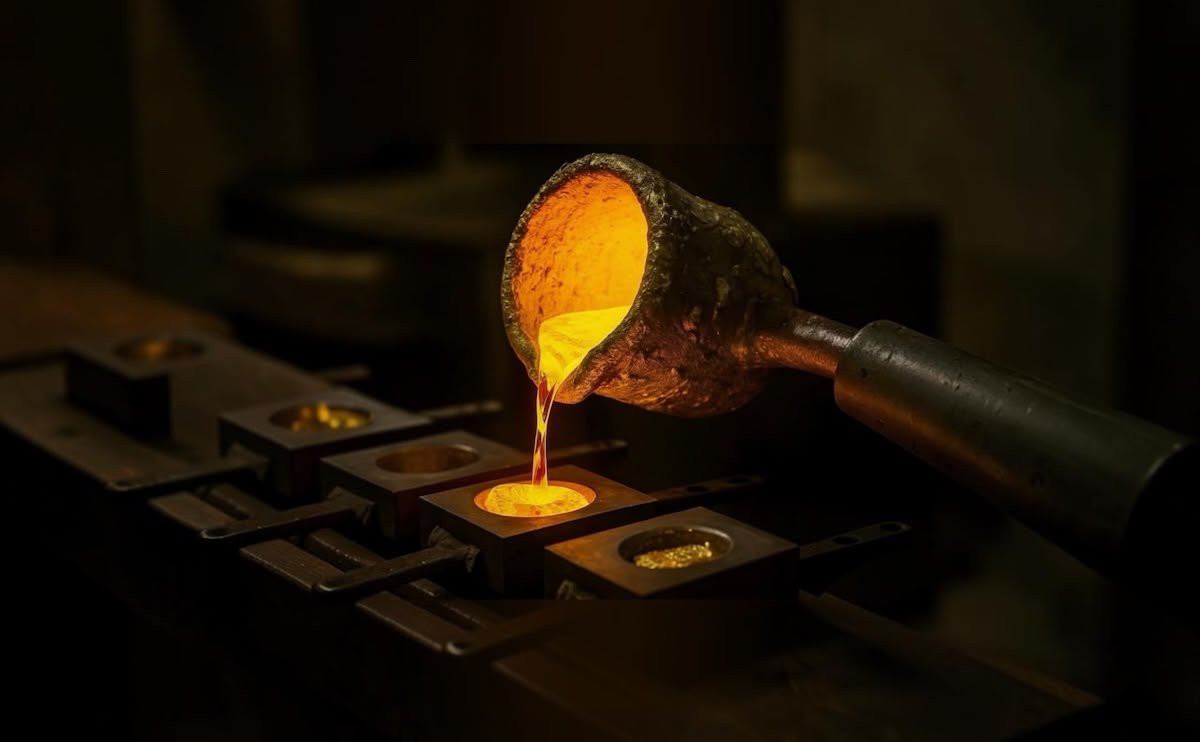
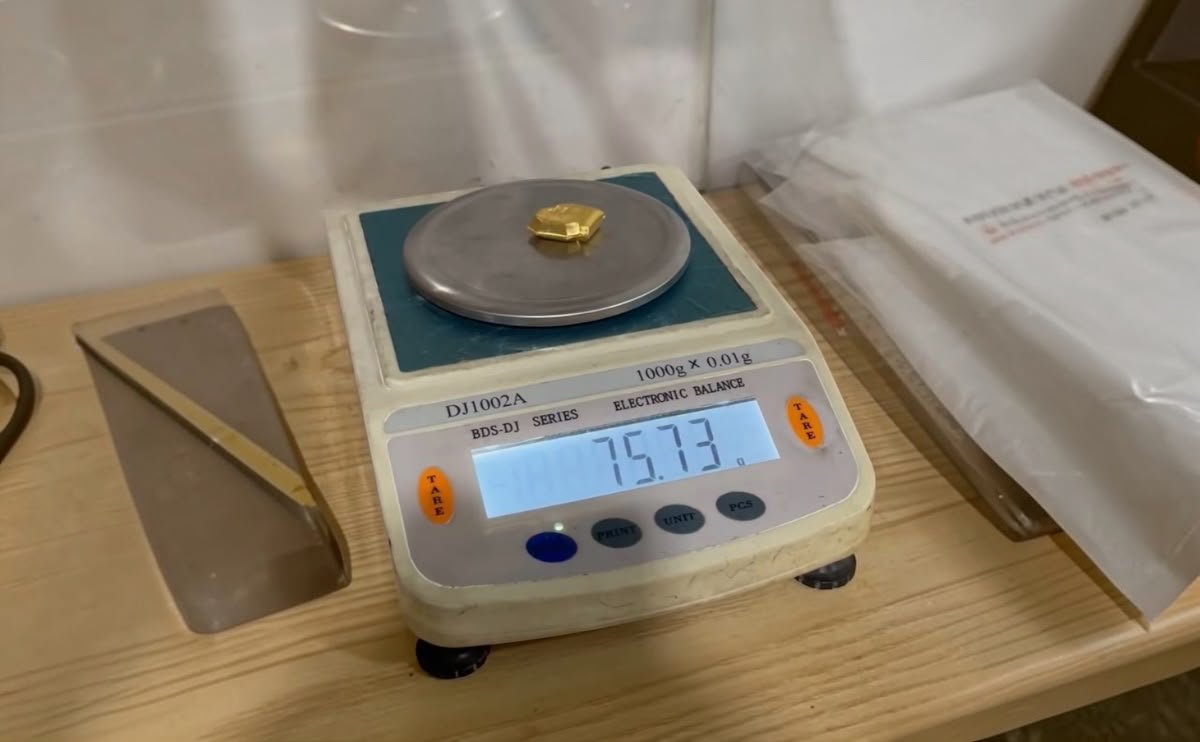
An investigation in Rajasthan reported that rhenium, a rare and very heavy metal, can be mixed with gold to raise its weight. The investigators tested the idea themselves. They mixed one gram of rhenium powder into 7.83 grams of 24-carat gold, which raised the weight to 8.83 grams. They then made a traditional ornament from the mixture and added 0.75 grams of alloy, which brought the finished piece to 9.58 grams.
The piece reportedly passed several purity tests at showrooms and a testing centre in Jodhpur, and it reportedly received a 22-carat stamp. The report traced the powder to a suspected supply chain in China. It also says the supplier’s agent claimed to have dealers in several Indian cities, and that a one-gram sample cost about ₹5,000 through a Mumbai dealer.
Please read this with care. The investigators made the sample to see whether it would pass. This rhenium gold scam report does not prove how widely the method is used, and the dealer claims remain unverified. It does show a real weak point, so buyers should understand it.
How the Rhenium Gold Scam Inflates Weight
Gold jewellery is priced by weight. The seller multiplies the weight by the day’s rate for the stated purity, then adds stones and making charges. A filler metal that adds weight without adding gold therefore turns into profit, because the buyer pays gold prices for metal that is not gold.
Use the investigators’ own numbers. The finished piece weighed 9.58 grams and carried a 22-carat stamp, which implies about 8.78 grams of pure gold. The piece actually held 7.83 grams. That is about 81.7 per cent gold instead of 91.6 per cent. Roughly 0.95 grams of gold is missing, around one-tenth of the gold the buyer paid for.
Now picture the same ratio on a 100-gram bridal set. The buyer would pay for about 91.6 grams of pure gold and receive about 81.7 grams. Roughly 10 grams would be missing, which is more than ₹1 lakh at current gold prices. This is an illustration, not a finding. It shows why the weight on a bill cannot be taken on trust.
Why Purity Tests Can Miss Heavy Metal Fillers
Heavy metals are dense, so they can stand in for gold’s weight. According to the reports, traditional acid and touchstone tests struggle to detect them. The reports also raise concerns about machine readings, though experts will need to confirm how far that goes. Some traders also speak of a substance sold as “gold powder”, but its origin has not been independently verified.
A purity stamp tells you what a test measured. It cannot tell you what happened to the metal before the test. For that reason, the rest of this guide focuses on questions you can ask, not stamps you can read.
Can a 0% or 2–3% Making Charge Point to This Scam?
Not on its own, and we want to be fair about that. Many honest jewellers run promotions. A low making charge proves nothing about the gold.
The useful question is narrower: where does the money come from? Making jewellery takes skilled labour, and hand-set work can take days. That cost does not vanish because a poster says zero. An honest seller recovers it elsewhere in the bill, usually through the gold rate, a wastage line, or stone pricing. A dishonest seller could recover it inside the metal, which is exactly where the alleged rhenium gold scam operates. You cannot tell the difference from a poster.
Therefore, treat a very low making charge as a prompt to check the gold, not as a bargain. Our guide to jewellery buying myths explains why zero-making-charge offers rarely mean what they promise. Our guide to Premium Jewellery Jaipur pricing shows what a transparent price looks like.
What a Fair Price Looks Like
A fair price has three honest parts. First, gold weight multiplied by the day’s rate. Second, gemstones, priced on their own quality. Third, a making charge that pays for the craftsmanship, shown as its own line.
At Taparia Jewels, we show all three separately on every quotation. We charge a genuine making charge, because skilled hand-setting deserves a genuine price. We would rather you see where every rupee goes than wonder where a discount was hidden. That is why we charge what we do, and why we do not run zero-making-charge offers.
Questions to Ask Before You Buy Gold Jewellery
What is the net gold weight, excluding stones? Stones add weight but carry their own price.
What purity is it, and how was it tested? Ask for the method, not only the stamp.
Can I have a piece independently tested before I finalise? A seller confident in the metal will not mind the question. A fire assay, which measures actual gold content, is generally regarded as the most reliable check, so ask whether one is possible.
Is the making charge a separate line? If it is bundled or “free”, ask where it went.
Does the invoice list each gemstone’s details? Our guide to Diamond Jewellery Jaipur explains what to look for.
Do I have an itemised invoice to keep? Keep it for life.
What Buyers Should Do Right Now
Do not panic, and do not assume every jeweller is involved. This is one investigation, reported this week, and regulators and testing bodies may respond. Follow the updates. Meanwhile, apply the questions above to any significant purchase, especially in wedding season, when large pieces change hands quickly. Our wedding season guide explains how to plan early so you never rush a decision. Our guide to jewellery investment in Jaipur explains why documented gold weight matters for long-term value.
Gemstones deserve the same scrutiny as the metal. Our guides on what Polki is and why Jaipur is famous for it and natural diamonds versus lab-grown diamonds explain what to verify there.
How Taparia Jewels Helps
At Taparia Jewels, you visit by private appointment in C-Scheme, or consult by video from abroad. We manufacture directly, quote gold, gemstones, and making charges separately, and answer every question you ask, with no schemes and no pressure. Our founding story since 1986 explains why trust, not discounts, built our business. You can also view our Zambian Emerald Polki & Diamond Choker by private appointment.
Follow Taparia Jewels
Follow us on Instagram at Taparia Jewels for behind-the-scenes updates. Additionally, connect with us on LinkedIn at Taparia Jewels for our jewellery knowledge series.
Frequently Asked Questions About the Rhenium Gold Scam
What is rhenium, and why is it in the news?
It is a heavy, rare metal that investigators say can be mixed with gold to raise its weight.
Is rhenium the same as rhodium?
No. Rhodium is a different metal, used to plate white gold.
Does a low making charge mean a jeweller is cheating?
No. But a discount says nothing about the gold, so verify the gold.
How can I protect myself?
Ask for net gold weight, the test method, and an itemised invoice. Consider independent testing for large purchases.
How do I book an appointment?
WhatsApp us at +91 9950966382 to schedule a private appointment at our C-Scheme workshop.
Visit Taparia Jewels in C-Scheme, Jaipur
Visit us by appointment at C-73, Flat No. 402, Blue Sky Apartments, Sarojini Marg, C-Scheme, Jaipur 302001. WhatsApp +91 9950966382, or explore tapariajewels.com. The rhenium gold scam shows that weight is easy to claim and hard to see, so we built our business on showing it.